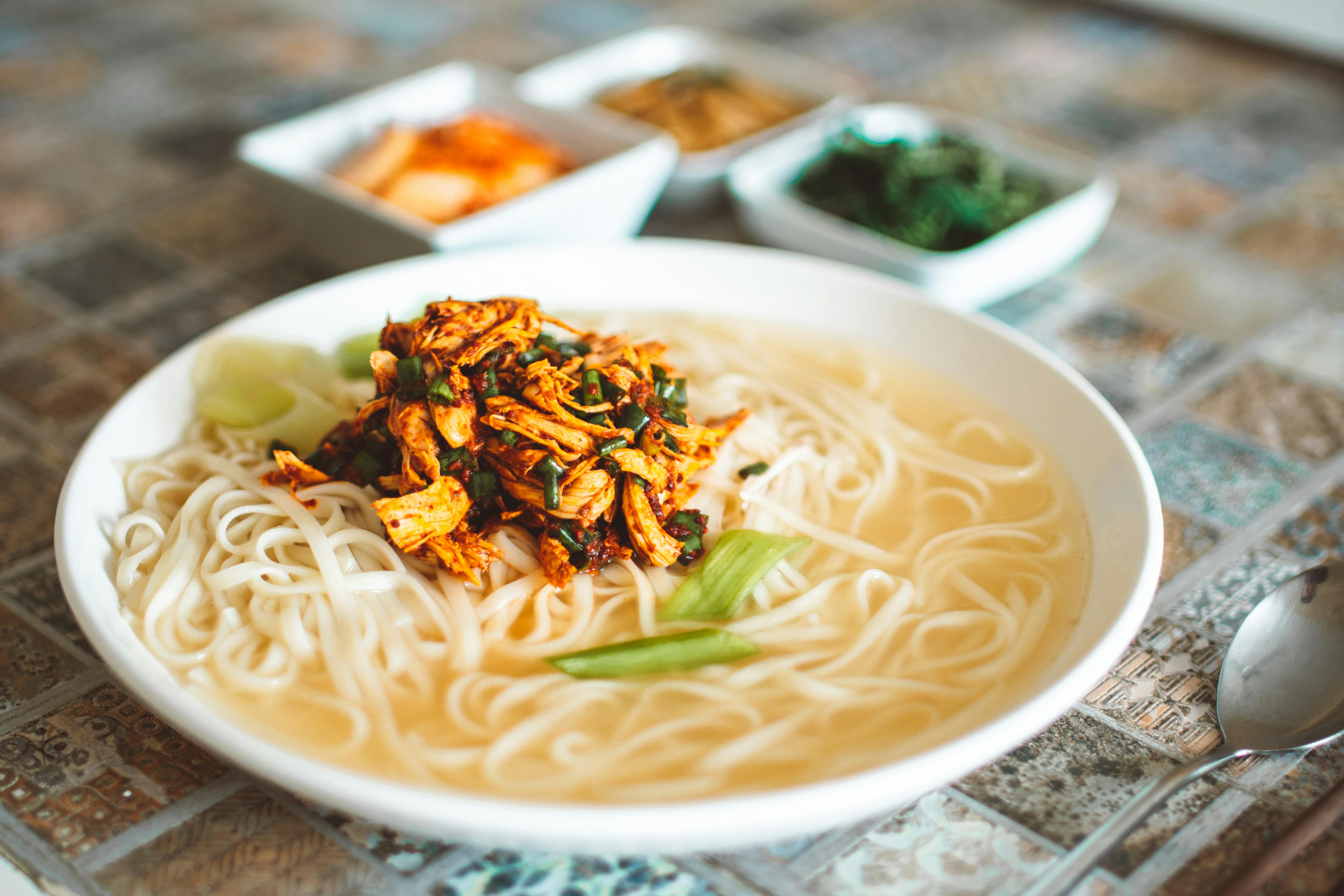
Bori-cha guksu: Cryogenic Starch Retrogradation Kinetics, Alkylpyrazine Volatilization, and Viselastic Glucan Network Deconvoluting
Synthesized within the contemporary culinary laboratories of South Korea as an ultra-refreshing summer innovation, the unique cold dish Bori-cha guksu (Chilled Barley Tea Noodle Soup) stands as a supreme, highly sophisticated biochemical monument to cryogenic starch retrogradation kinetics, alkylpyrazine volatilization, and viscoelastic glucan network deconvoluting mechanics. The structural base of this dish relies on ultra-thin wheat and roasted barley noodles (*somyeon*) extruded from a high-protein flour matrix. The dough is intensively kneaded to align long glutenin and gliadin chains into a tight, gas-impermeable viscoelastic network before extrusion. When these noodles are boiled, the linear amylose and branched amylopectin chains undergo complete thermal gelatinization, expanding their carbohydrate lattices. The cooked strands are instantly plunged into an ice-water bath, initiating rapid cryogenic starch retrogradation that locks the uncoiled chains into a highly resilient, snapping, and ultra-firm texture. This chilled noodle mass is submerged within an icy, crystal-clear broth composed of dark roasted barley tea (*bori-cha*), low-salinity beef dashi, and a splash of fermented radish brine maintained at precisely 1°C. At this near-freezing thermal plateau, the volatile alkylpyrazines and furans locked within the roasted barley grains are stabilized, releasing a profoundly deep, nutty, and smoky aroma. The cold fluid minimizes the overall swilling of the starch strands, preventing the noodles from absorbing excess water and ensuring an exceptionally clean, crisp mouthfeel.