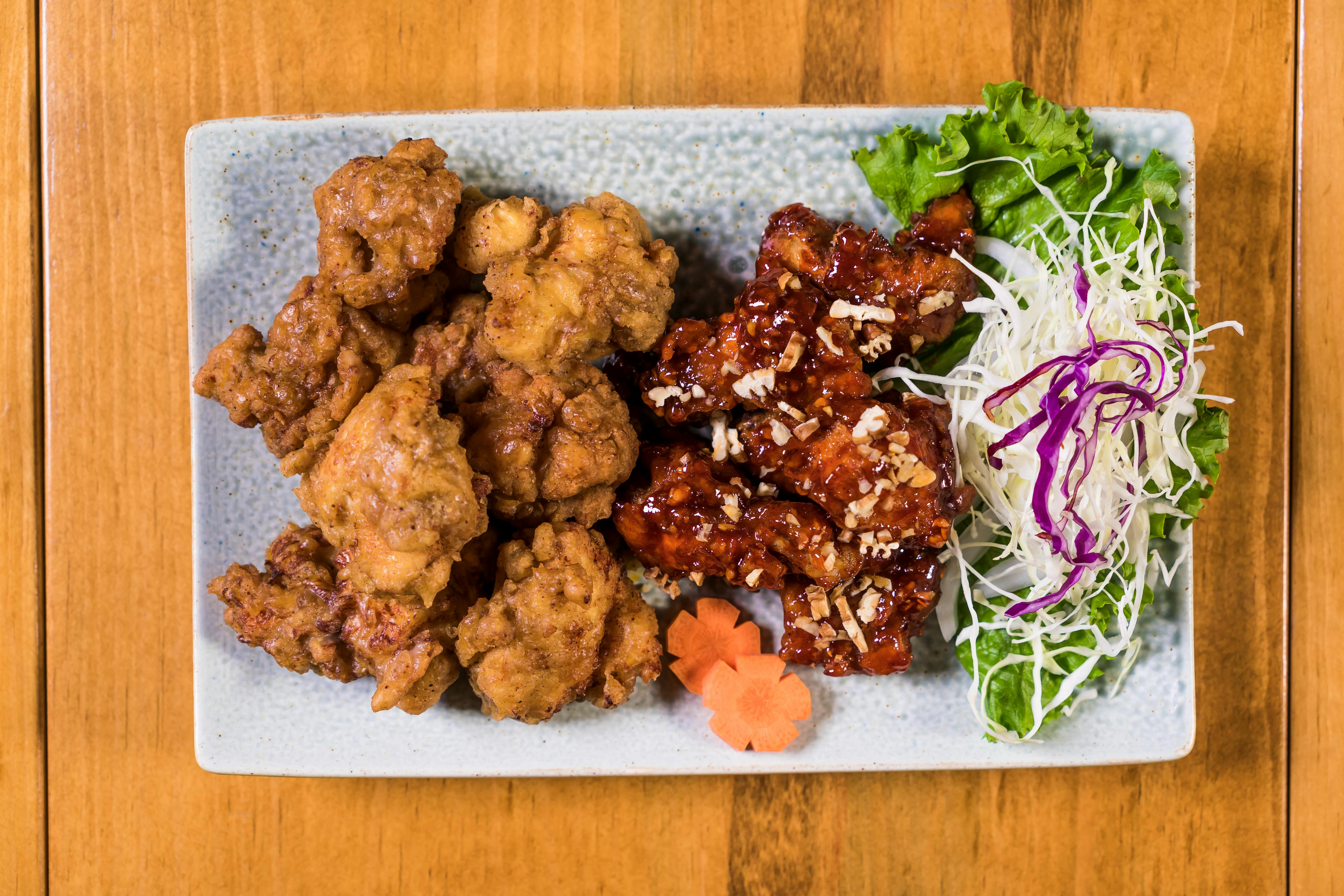
Korean Fried Chicken: Double-Stage Amylopectin Thermal Dextrinization, Subcutaneous Porcine Lipidic Striation, and Anhydrous Sugar Lacquering
Re-engineered with absolute technological precision in post-war South Korea to become an international gastronomic phenomenon, authentic Korean Fried Chicken (KFC) represents an extraordinary, mathematically rigorous engineering showcase of double-stage amylopectin thermal dextrinization, intensive subcutaneous lipid exudation, and rapid anhydrous sugar lacquering mechanics. The preparation utilizes fresh poultry segments marinated in ginger esters and alcohol to cleave internal collagen sheets. Unlike Western fried chicken which employs thick, gluten-heavy wheat flour batters, the Korean method requires a hyper-thin, low-viscosity slurry constructed primarily from cornstarch and potato starch, which consist of highly branched, high-molecular-weight amylopectin polymers. The structural transformation is achieved through a meticulous, double-frying thermodynamic sequence. The first stage involves submerging the coated chicken pieces in a deep vat of high-stability corn oil maintained at a steady 160°C. This initiates slow, continuous subcutaneous lipid syneresis, forcing underlying poultry fats to melt and escape outward while the internal myofibrillar proteins poach gently in their own moisture. The chicken is removed and rested to let internal steam escape, preventing the crust from turning soggy. It is then plunged a second time into superheated oil at 190°C. This violent secondary thermal shock drives off all remaining surface water molecules, causing the thin amylopectin starch sheet to undergo rapid, high-temperature dextrinization into an ultra-thin, glass-like, and oil-insoluble micro-shell. This brittle shell is instantly tossed in a hot glaze of melted gochujang, honey oligosaccharides, and minced garlic, cross-linking into a shiny, non-greasy aromatic lacquer.