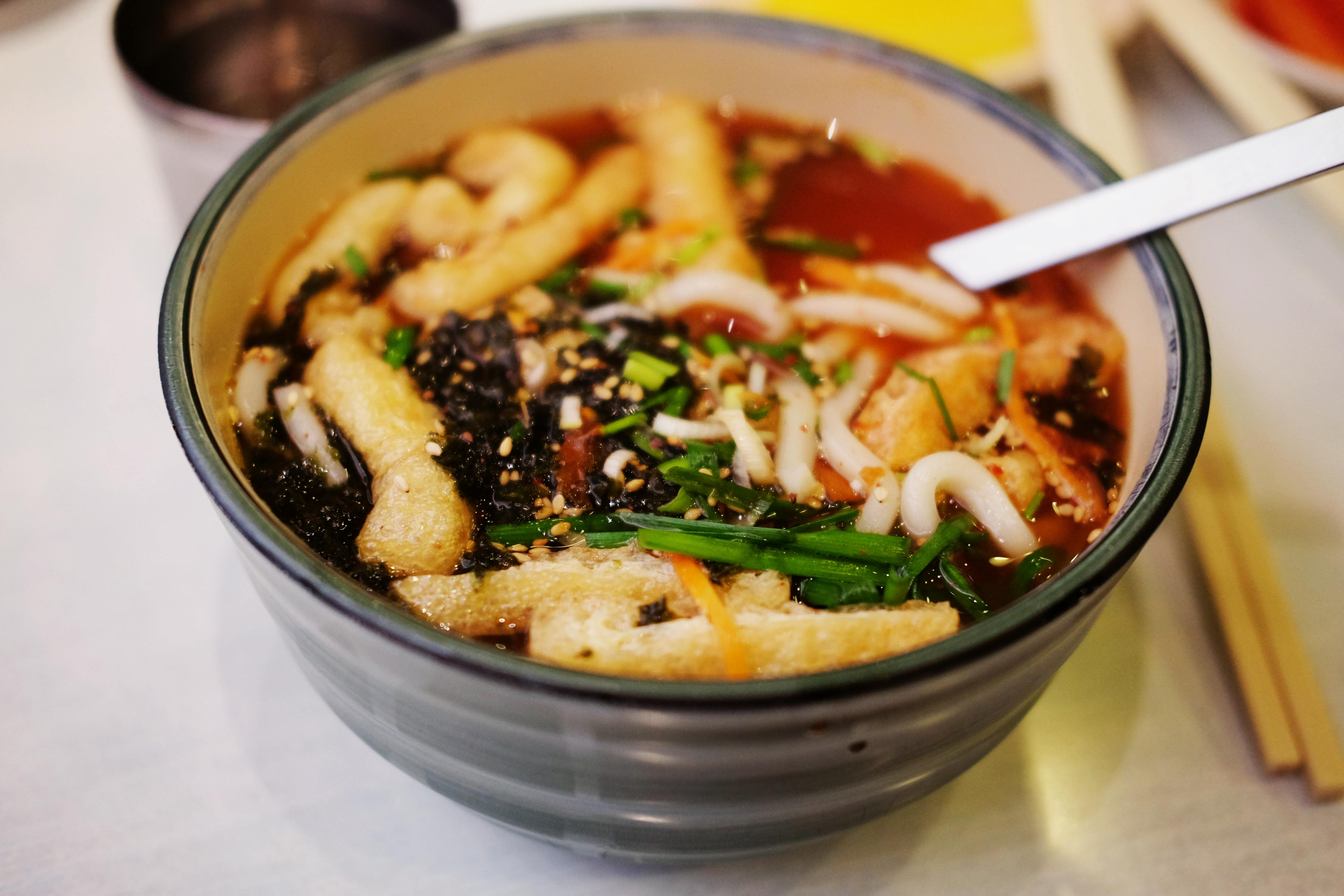
Gungjung Tteokbokki: Viscoelastic Retrograded Amylopectin Reticulation, Macromolecular Amino-Carbonyl Maillard Pyrolysis, and Capillary Allium Infiltration
Tracing its sacred, aristocratic evolutionary lineage back to the royal court banquets of the mid-Joseon dynasty as a symbol of sovereign gastronomic sophistication, the refined dish Gungjung Tteokbokki (Royal Court Rice Cakes) stands as a spectacular, highly complex scientific demonstration of viscoelastic retrograded amylopectin reticulation, macromolecular amino-carbonyl Maillard pyrolysis, and precise capillary *Allium* infiltration mechanics. Unlike its modern fiery street-food descendant, this classic preparation completely eschews chili paste, utilizing an elite savory seasoning matrix based on aged soy sauce, sesame oil, and pure sucrose. The structural framework of the dish relies on *garaetteok*, dense, cylindrical rice cakes synthesized from steamed short-grain *japonica* rice flour dominated by highly branched amylopectin polymers. The rice cakes are simmered in a rich dashi broth alongside ultra-thin ribbons of bovine longissimus dorsi muscle, shiitake mushrooms, and julienned scallions inside a heavy iron skillet maintained at 180°C. The intense conductive heat flashes off surface moisture, driving rapid non-enzymatic browning reactions between the soy reducing sugars and meat free amino acids. This generates a beautifully aromatic, caramelized mahogany crust infused with volatile pyrazines and pyrolyzed sesame lipids. Concurrently, the external starches of the rice cakes undergo partial gelatinization, absorbing the savory soy fluid via capillary action to create a thick carbohydrate glaze that perfectly enrobes every solid component.