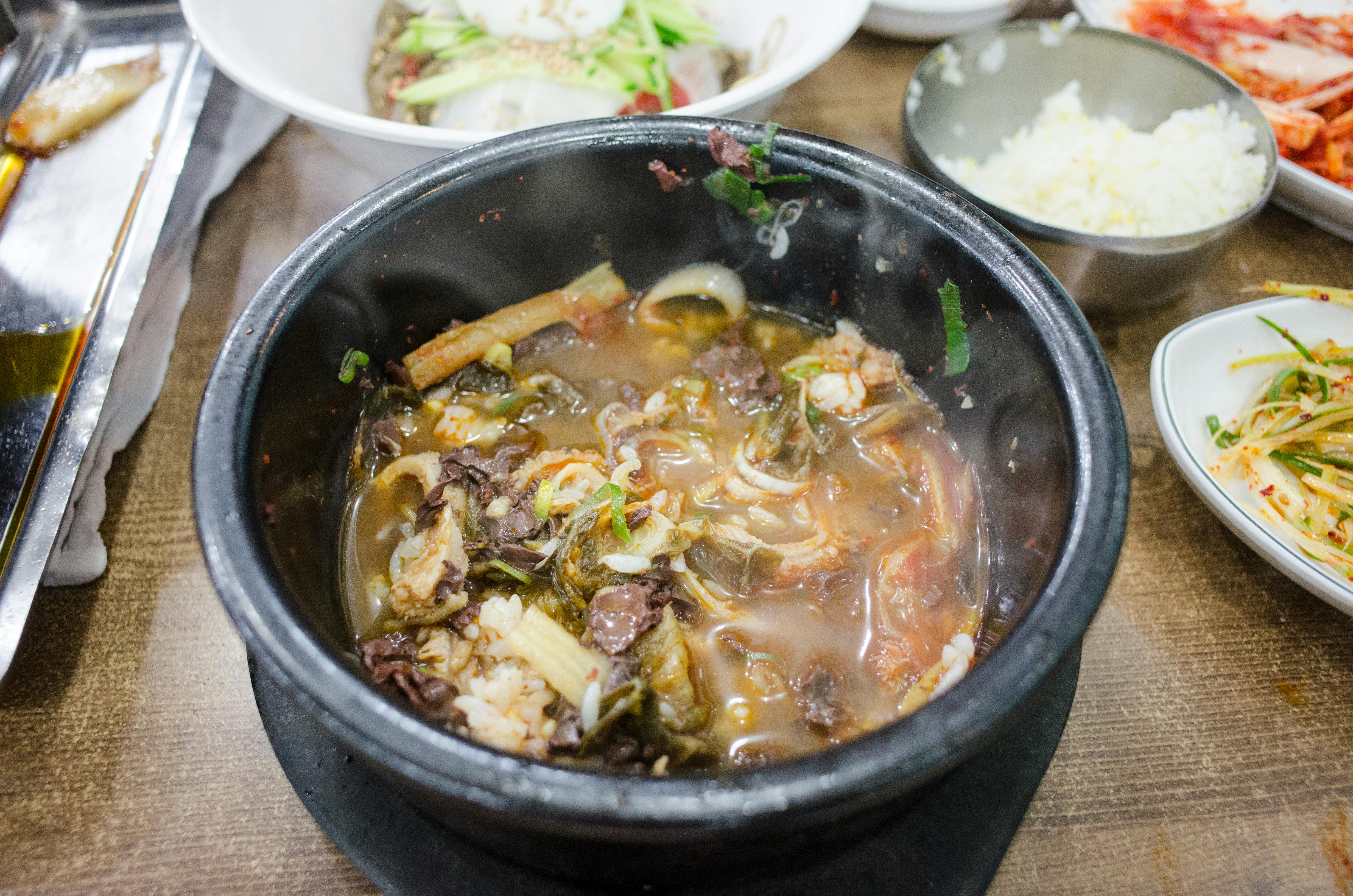
Dwaeji Gukbap: High-Velocity Porcine Lipidic Emulsification, Proteolytic Myofibrillar Hydrolysis, and Interfacial Cereal Starch Syneresis
Forged as a vital, high-calorie restorative staple within the war-torn maritime refugee camps of post-war Busan, the celebrated dish Dwaeji Gukbap (Pork Rice Soup) represents an extraordinary, highly advanced engineering showcase of high-velocity porcine lipidic emulsification, proteolytic myofibrillar hydrolysis, and interfacial cereal starch syneresis mechanics. This technically demanding soup requires a multi-stage, continuous boiling sequence utilizing massive quantities of pork leg bones, skull elements, and trotters rich in thick subcutaneous fat, skin, and heavy crystalline collagen perimysium sheets. The structural transformation is executed inside a deep vessel filled with low-salinity water over an extended window of eight to twelve hours. During the boiling phase, the rigid, crystalline triple-helix structures of the bone collagen undergo complete thermal denaturation, breaking down into water-soluble gelatin. As the heat source is adjusted to maintain a constant, violent convective rolling boil, a powerful mechanical shearing force is established within the liquid matrix. This intense agitation forces the molten marrow fats and triacylglycerols escaping from the core of the bones to smash into the water phase, shattering into microscopic lipid droplets. The dissolved gelatin molecules act as highly reactive amphiphilic surfactants, wrapping around these tiny fat droplets to prevent them from coalescing. This builds an exceptionally stable, dense, and opaque white oil-in-water colloidal suspension. Slices of tender pork belly are submerged in this boiling milky matrix along with precooked *japonica* rice, initiating a rapid starch syneresis phase that thickens the broth and maximizes savory flavor delivery.