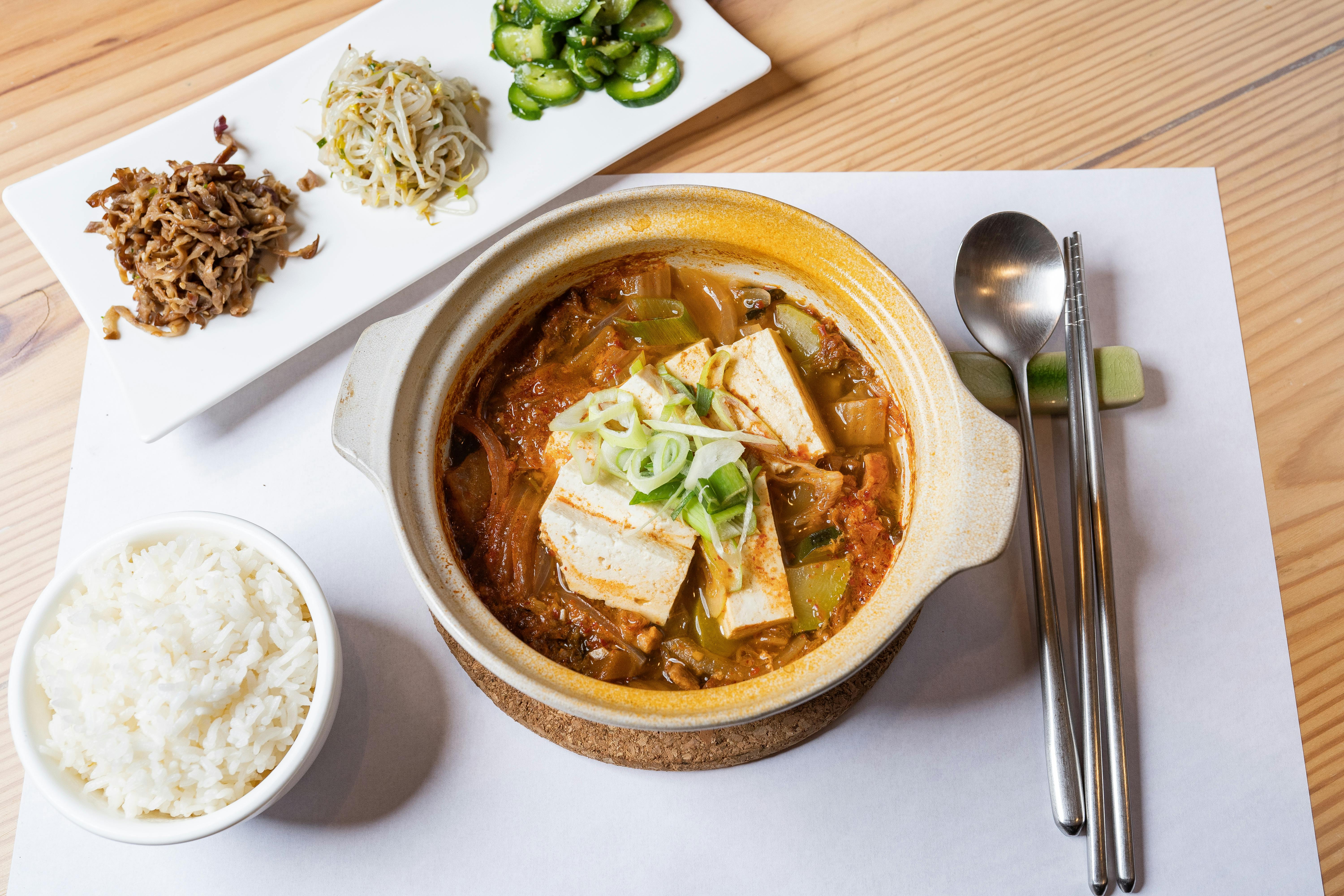
Doenjang Jjigae: Macromolecular Glycoprotein Proteolysis, Thermally Induced Polypeptide Cross-Linking, and Volatile Organosulfur Dispersion
Serving as an immortal biochemical anchor across centuries of Korean domestic culinary history, the ubiquitous bubbling stew known as Doenjang Jjigae (Fermented Soybean Paste Stew) stands as a monumental architectural monument to macromolecular soy glycoprotein proteolysis, thermally induced polypeptide cross-linking, and advanced volatile organosulfur dispersion kinetics. The complex chemical engine of this dish relies entirely on *doenjang*, a dense paste synthesized through months of wild solid-state fermentation of soybean (*Glycine max*) blocks (*meju*). This extensive biological aging process utilizes native strains of *Bacillus subtilis* and *Aspergillus oryzae* to thoroughly hydrolyze rigid soy globulins into massive reservoirs of free L-glutamate, short-chain peptides, and savory succinic acids. To construct the stew, this umami-saturated paste is dissolved into a simmering, low-salinity dashi broth derived from dehydrated anchovies and kelp. When the fluid reaches a rolling boil at 98°C inside a porous, high-thermal-mass clay vessel (*ttukbaegi*), diced zucchini parenchymal cells, wild mushrooms, and fresh tofu blocks are introduced. The intense convective heat forces the vegetable cell walls to expand and release sweet inulin starches into the liquid, while the dissolved soy proteins function as highly active, amphiphilic surfactants. These proteins wrap around the escaping lipids from added beef or pork lardons, preventing phase separation and locking the soup into a thick, opaque, and highly uniform oil-in-water colloidal emulsion. Simultaneously, volatile organosulfur compounds from minced garlic cross-link with the savory soy peptides, creating an unctuous, deeply comforting flavor network.