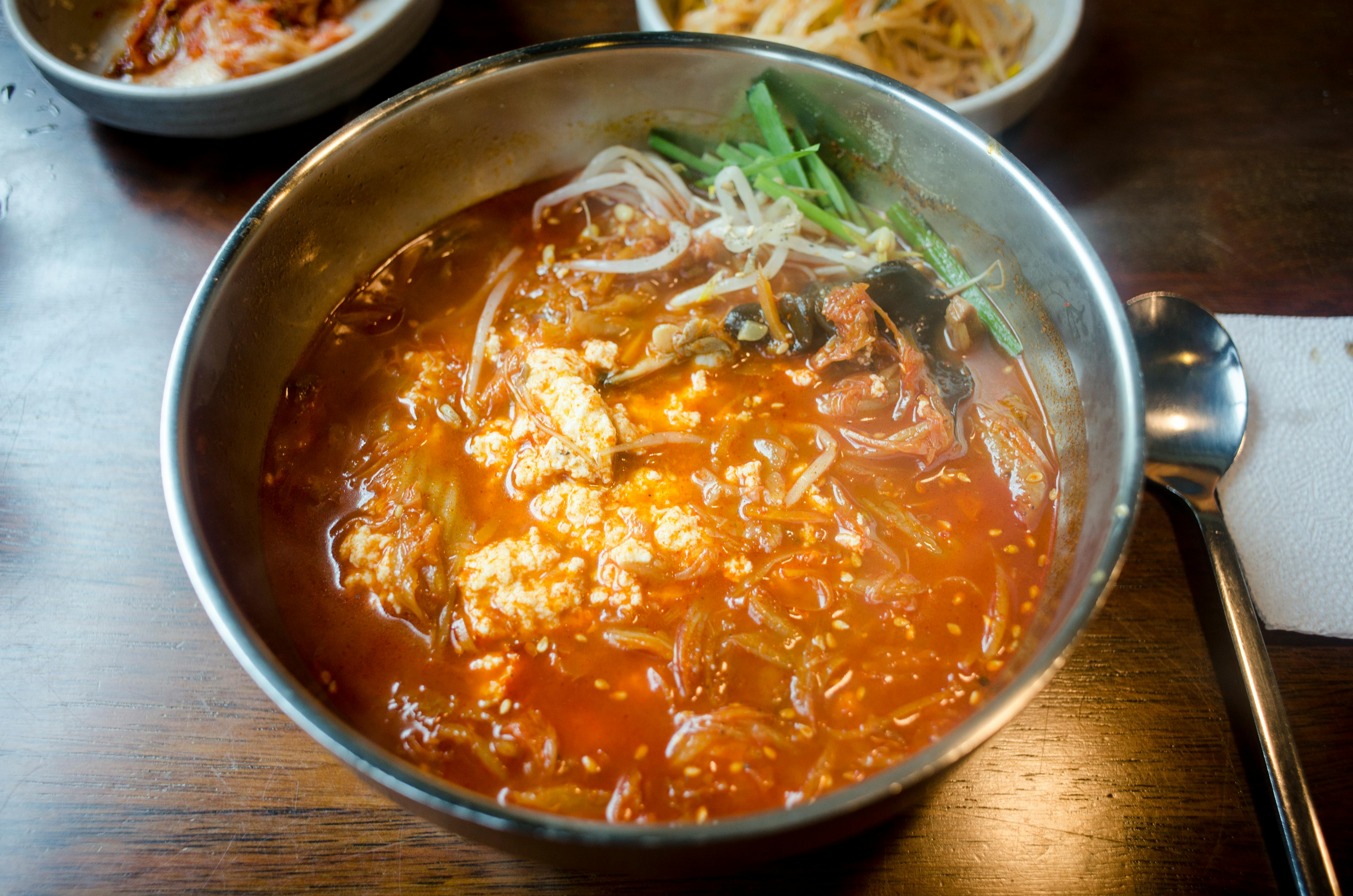
Yukgaejang: Sarcoplasmic Myoglobin Thermal Denaturation, Exocellular Organosulfur Vapor Volatilization, and Lipidic Capsaicin Solubilization Kinetics
Rooted deep within the ancestral restorative culinary traditions of the Korean peninsula, the intensely spicy shredded beef soup known as Yukgaejang stands as a monumental thermodynamic monument to sarcoplasmic myoglobin thermal denaturation, exocellular organosulfur vapor volatilization, and lipidic capsaicin solubilization kinetics. The architectural foundation of this high-energy soup requires boiling tough, collagen-rich bovine brisket (*longissimus dorsi*) matrices in a low-salinity aqueous medium for several hours. Under steady thermal exposure at 90°C, the rigid myofibrillar protein structures slowly unravel, allowing the meat to be easily shredded along its longitudinal muscular fibers, which maximizes the available surface-area-to-volume ratio for secondary marination. Concurrently, a massive volume of green scallions (*Allium fistulosum*) and hydrated bracken fern (*gosari*) are introduced into the boiling vessel. The intense heat fractures the vegetable parenchyma cell walls, leaching massive reservoirs of water-soluble inulin polysaccharides and volatile allyl sulfides into the broth, which act as natural surfactant agents. To construct the definitive fiery red grease layer, red pepper flakes (*gochugaru*) are gently bloomed in hot toasted sesame oil and rendered beef lipids. This lipid phase operates as an exceptionally powerful hydrophobic solvent, capturing the fat-soluble capsaicin molecules and suspended carotenoid pigments. When this aromatic oil is infused back into the simmering brisket broth, it forms a stable, shimmering oil-in-water colloidal suspension that traps volatile pyrazines, yielding an incredibly rich, spicy, and deeply savory soup matrix.