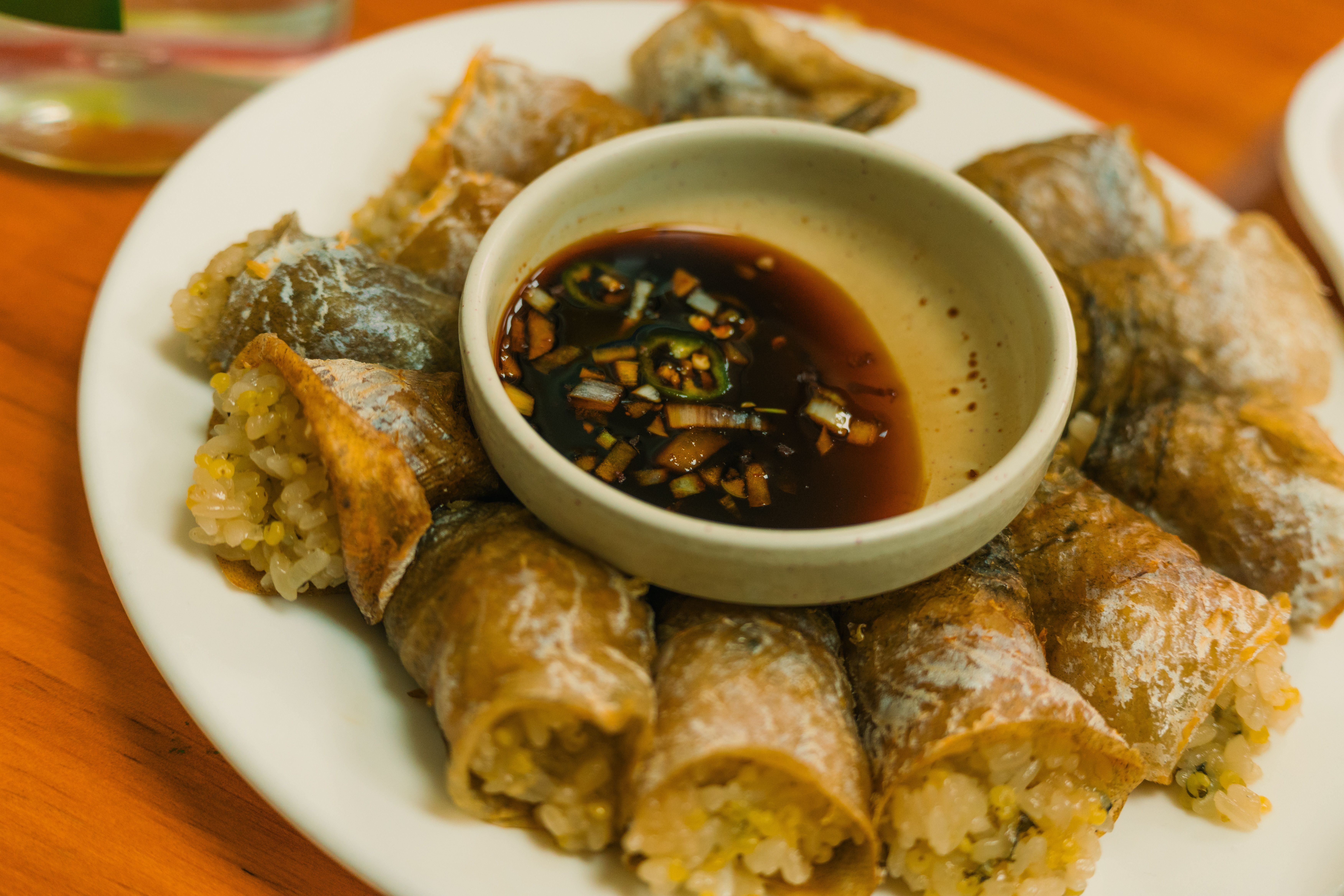
Haemul Jeon: High-Hydration Gluten Setting, Interfacial Amylose Dextrinization Matrices, and Exocellular Marine Vapor Leaching
Evolving into a deeply cherished rainy-day comfort staple across coastal tavern cultures, the savory seafood pancake known as Haemul Jeon stands as a supreme, highly sophisticated biochemical monument to high-hydration gluten setting, interfacial amylose dextrinization matrices, and exocellular marine vapor leaching mechanics. The structural base of this pan-fried dish relies on a thin, ice-cold batter formulated with a high-hydration blend of low-protein wheat flour, rice flour, and potato starch. Keeping the batter near freezing temperatures minimizes the kinetic activation of gliadin and glutenin chains, completely preventing excessive gluten alignment and ensuring a delicate crust. The construction begins by pouring this cold batter onto a heavy iron griddle superheated to 190°C and heavily lubricated with vegetable oil. A massive assortment of fresh seafood—including sliced squid rings, whole shrimp, and oysters—is scattered directly into the wet batter matrix, alongside fresh green scallions. As the heat rises, a dual-phase thermodynamic sequence occurs. The intense steam generated by the rapidly dehydrating marine tissues and scallion parenchyma cells rises upward, effectively steam-poaching the inner seafood components. Simultaneously, as the water matrix completely evaporates from the base of the pan, the concentrated rice and potato starches undergo high-temperature interfacial dextrinization and thermal dehydration against the greased iron. This freezes the bottom into a beautiful, crisp, and lace-like golden carbohydrate web that beautifully encases the tender, juicy interior.