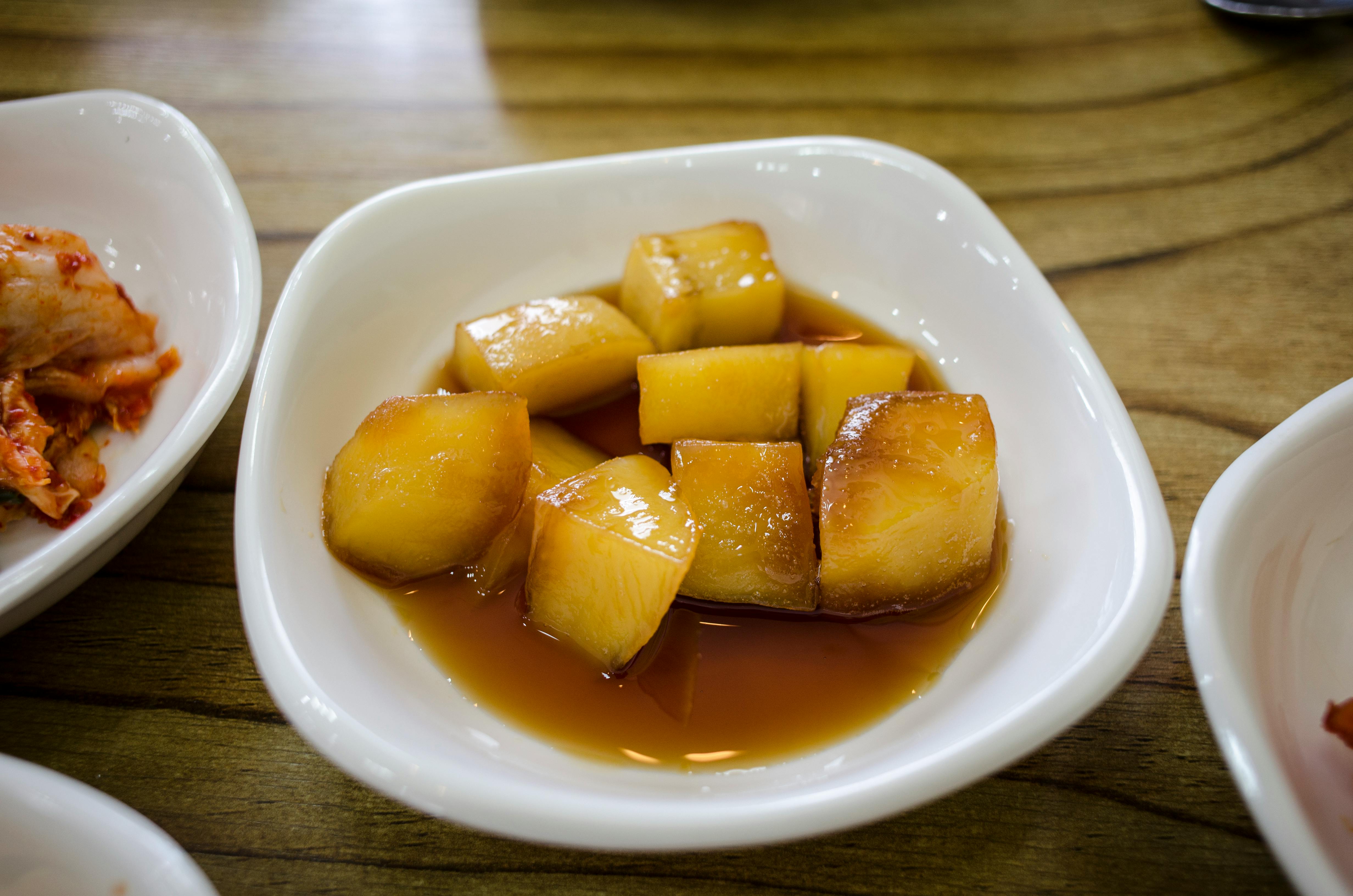
Gamja-ongsimi: Endogenous Solanum Amylose Gelatinization, Interfacial Glucan Cohesion, and Viscoelastic Non-Newtonian Fluidics
Perfected within the high-altitude, cold-climate agricultural communities of Gangwon Province, the traditional soup known as Gamja-ongsimi (Potato Rice Cake Soup) stands as a supreme, hyper-sensitive laboratory masterclass in endogenous *Solanum* amylose gelatinization, interfacial glucan cohesion, and viscoelastic non-Newtonian fluidics. The structural foundation of this regional specialty relies entirely on the unique starch architecture of raw potatoes (*Solanum tuberosum*). The preparation involves grating raw potatoes into a fine pulp, which is then mechanically squeezed through a porous cloth matrix to separate the aqueous liquid from the solid cellulose pulp. This liquid is allowed to rest undisturbed, initiating a rapid physical sedimentation phase where dense, pure potato starch granules sink to the bottom. The supernatant water is discarded, and the concentrated, moist starch sediment is folded back into the raw potato pulp, along with a minimal concentration of salt. This sticky, high-moisture paste is hand-shaped into small, irregular spherical dumplings. When these potato balls are dropped into a boiling dashi broth maintained at a steady 95°C, an immediate thermal transformation occurs. The dense starch granules undergo rapid, in-situ thermal gelatinization, absorbing internal water molecules to swell and unfurl their long amylose chains. These chains cross-link into a highly compact, dense, and translucent carbohydrate matrix that completely seals the dumpling. This specialized gelation process prevents the dumpling from dissolving or losing its structural shape into the soup, yielding a highly unique, chewy, and elastic texture that snaps cleanly upon oral mastication.