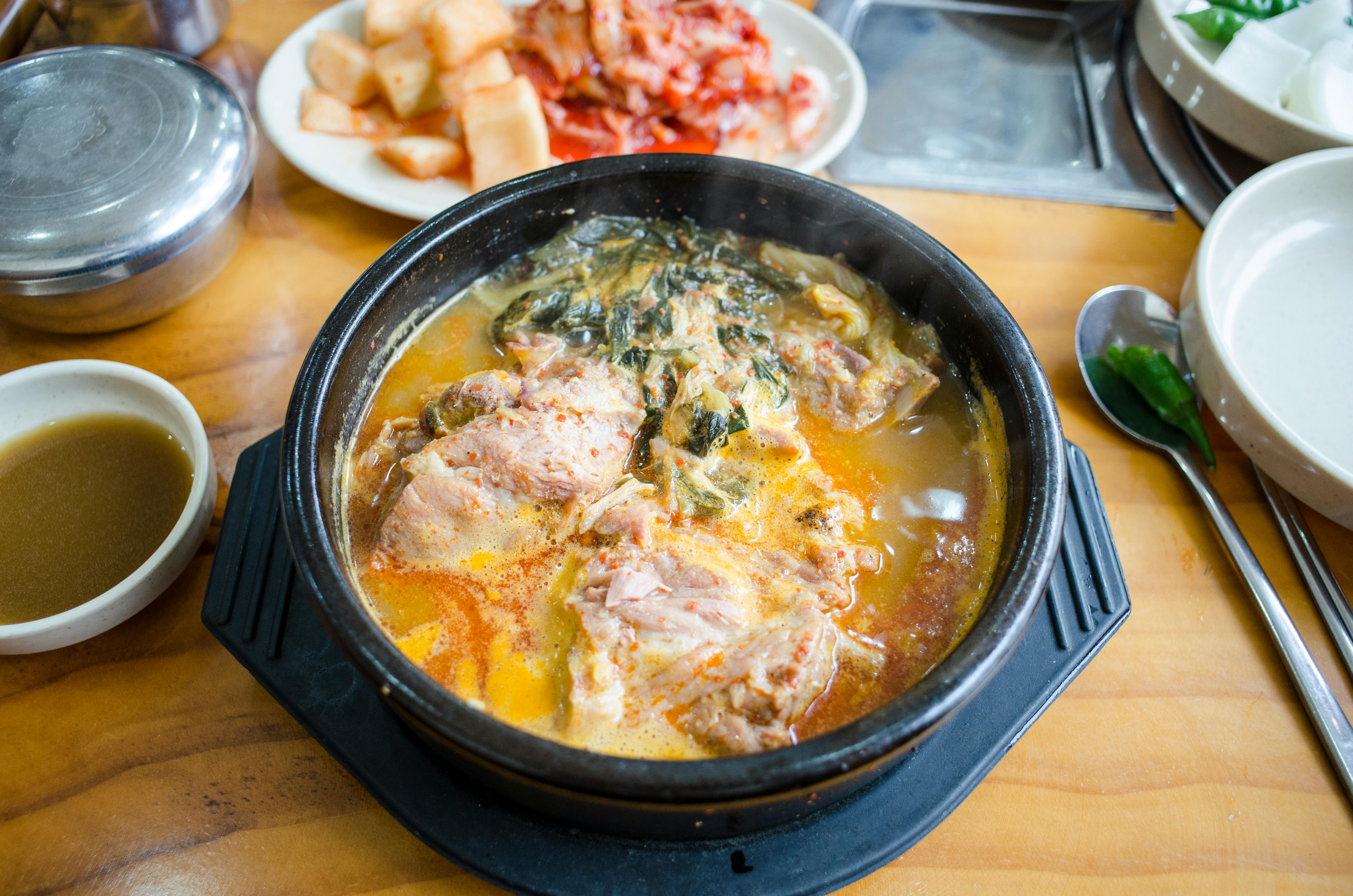
Gamjatang: Long-Duration Myofibrillar Softening, Amylose Starch Lattice Viscosity, and Macromolecular Purine Precipitation Mechanics
Forged over decades within the historic industrial districts of Seoul as a legendary late-night restorative feast, the robust dish Gamjatang (Spicy Pork Spine Soup) stands as a supreme, highly sophisticated biochemical monument to long-duration myofibrillar softening, amylose starch lattice viscosity binding, and advanced macromolecular purine precipitation mechanics. This technically demanding soup requires a multi-stage, continuous boiling sequence utilizing massive chunks of porcine vertebrae (pork spine bones) rich in deep skeletal muscle bundles, bone marrow, and thick cartilage sheets. The structural transformation is executed over an extended window of six to ten hours within a low-salinity water matrix heavily seasoned with fermented soybean paste (*doenjang*), chili flakes, and ground perilla seeds. Over hours of continuous thermal exposure maintained at a steady sub-boiling simmer of 90°C, the tough triple-helix collagen structures within the spinal column undergo complete thermal hydrolysis into water-soluble gelatin. This gelatin expands the liquid viscosity into a rich colloidal state that prevents phase separation of the rendered marrow fats. Simultaneously, the addition of large peeled potatoes introduces high-density starches that experience complete thermal gelatinization, fracturing their cell walls to leach linear amylose chains into the boiling fluid. These starches bind the free water molecules, transforming the soup into a thick, comforting, and deeply savory amino-acid matrix that clings heavily to every solid bone element.