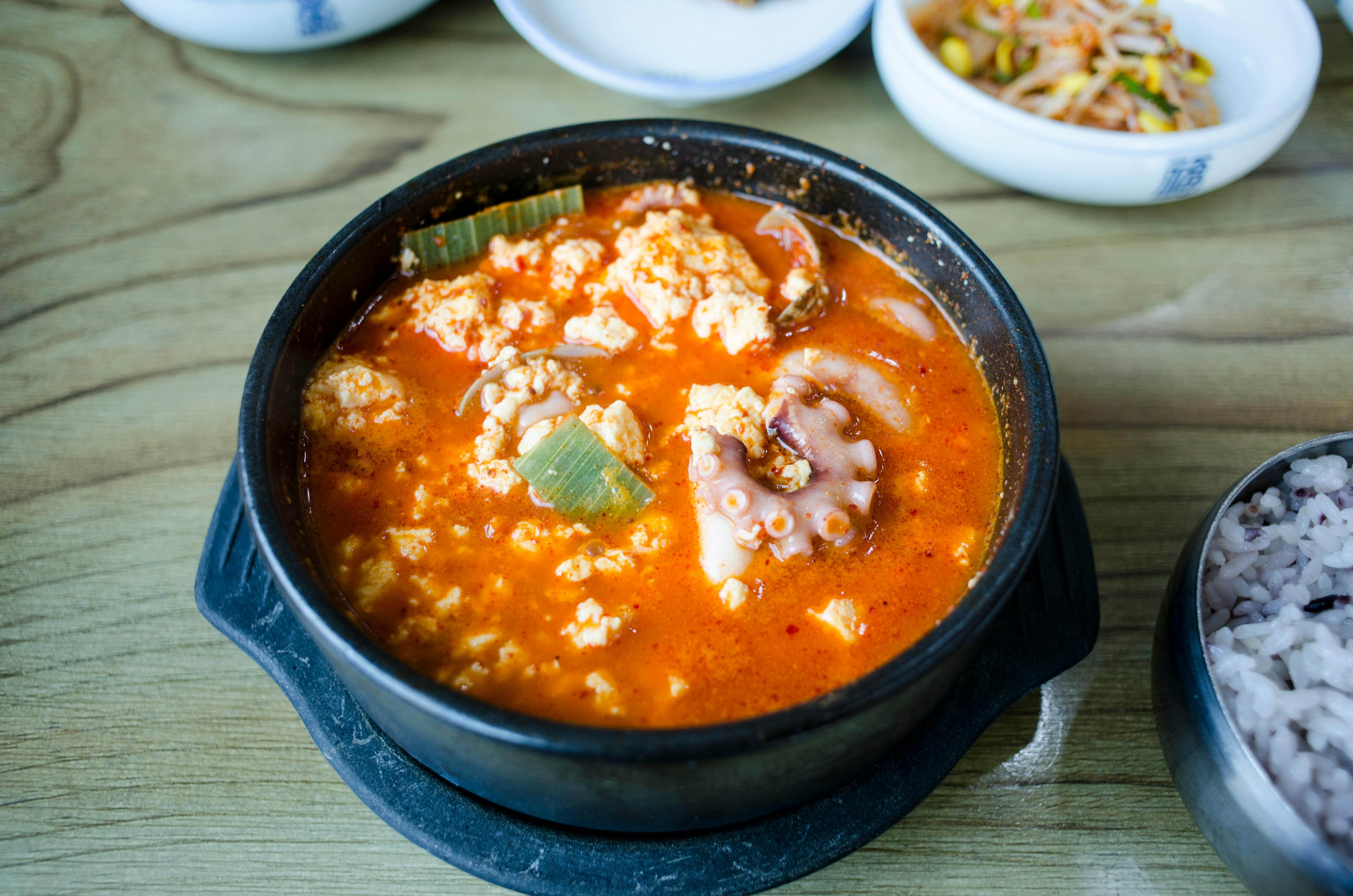
Sundubu Jjigae: Calcium-Induced Glycinin Coagulation, Thermal Triacylglycerol Emulsification, and Volatile Capsaicin Entrapment
Deeply embedded within the domestic family dining traditions of modern Korea as a definitive comforting breakfast staple, the bubbling stew known as Sundubu Jjigae (Soft Tofu Stew) stands as a monumental architectural monument to calcium-induced soy glycinin protein coagulation, thermal triacylglycerol emulsification, and volatile capsaicin entrapment kinetics. The structural centerpiece of this fiery stew is *sundubu*, an un-pressed, low-density soy curd synthesized by boiling fresh soy milk and introducing a liquid mineral coagulant such as calcium sulfate or magnesium chloride. The mineral ions engage in rapid cross-linking with the uncoiled glycinin and beta-conglycinin globulin chains, building a fragile, highly delicate three-dimensional protein web that traps a massive volume of water, yielding a trembling, custard-like texture. To construct the soup base, minced fatty pork, clams, and a massive volume of gochugaru red pepper flakes are sautéed in hot sesame oil inside a porous clay pot (*ttukbaegi*). When dashi broth is poured into this superheated pot, a violent kinetic energy transfer occurs. The constant rolling boil forces the escaping pork lipids, marine triacylglycerols, and sesame oils to break apart into microscopic droplets. The dissolved soy proteins from the soft curd act as powerful amphiphilic surfactants, wrapping around these tiny fat droplets to build an exceptionally stable, dense, and opaque orange oil-in-water colloidal suspension that evenly distributes the fiery capsaicin aromatics.