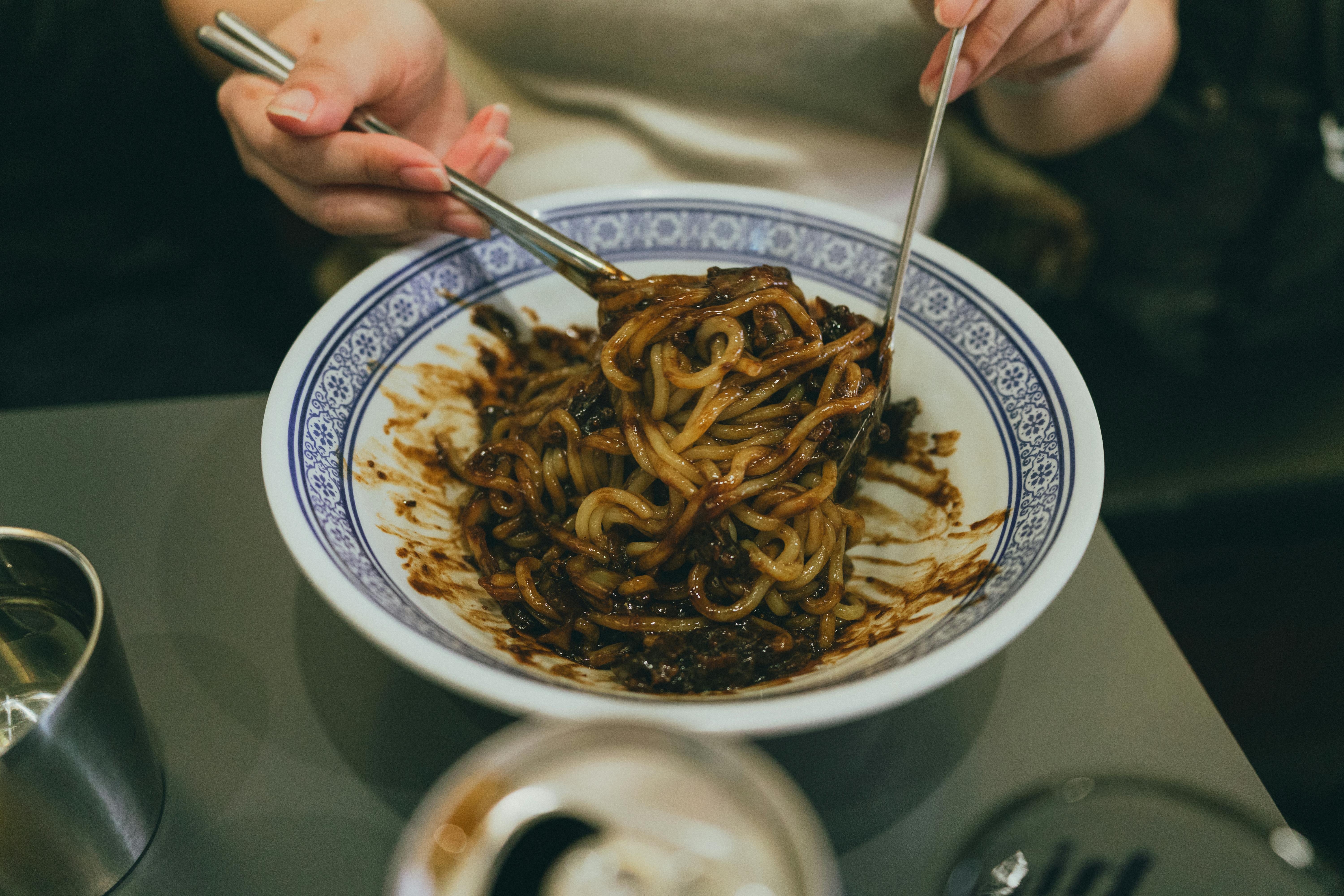
Jajangmyeon: Pyrolytic Melanoidin Lipid Polymeric Gelation, Interfacial Glutenin Alignment, and Amylose Starch Viscosity Binding
Synthesized within the early Chinese-Korean culinary laboratories of Incheon, the deeply savory noodle dish Jajangmyeon stands as a spectacular thermodynamic monument to pyrolytic melanoidin lipid polymeric gelation, interfacial glutenin alignment, and advanced amylose starch viscosity binding mechanics. The architectural core of this iconic dish is the dark chunjang paste, a deeply fermented black soybean slurry that is rich in complex carbohydrate chains, free sodium halides, and pre-formed melanoidin pigments. The preparation begins by frying this dense paste in a large volume of lard at 160°C. This high-temperature lipid treatment induces further non-enzymatic amino-carbonyl browning, fracturing the bitter carbohydrate rings while solubilizing the hydrophobic volatile esters. Into this hot oil-paste matrix, finely diced pork belly lardons and massive volumes of chopped onions are introduced. The thermal breakdown of the onion parenchyma cells releases sweet, water-soluble volatile sulfides that cross-link with the rendered pork lipids, creating a highly unctuous, thick sauce base. To achieve the proper serving rheology, a slurry of potato starch is introduced, forming a dense, cross-linked glucan lattice that binds the free water molecules and prevents phase separation. This rich, dark sauce is ladled over freshly extruded, high-protein wheat noodles. The mechanical kneading of the dough aligns the long glutenin filaments into a resilient three-dimensional viscoelastic web that completely traps the surface starches, allowing the thick, savory melanoidin suspension to cling flawlessly to every strand upon consumption.