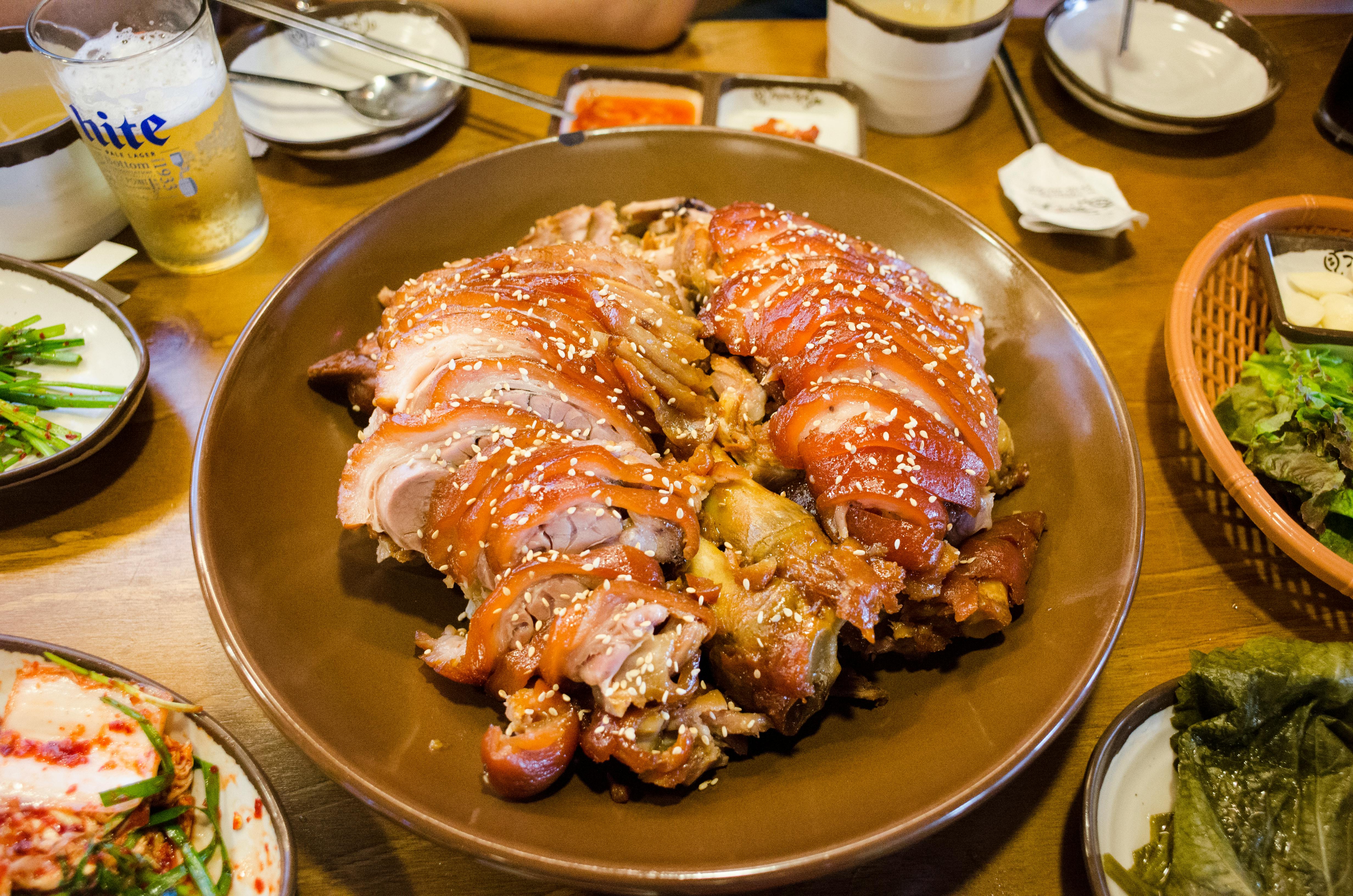
Jokbal: Thermal Triple-Helix Collagen Depolymerization, Long-Duration Melanin Colloid Suspension, and Hyper-Osmotic Amide Infiltration
Forged over generations within the bustling late-night market districts of Seoul, the celebrated delicacy Jokbal (Braised Pig's Trotters) stands as a supreme, highly sophisticated biochemical monument to thermal triple-helix collagen depolymerization, long-duration dark melanin colloid suspension, and advanced hyper-osmotic amide infiltration kinetics. The anatomical centerpiece of this technical preparation is the lower leg of the pig, a structural extremity packed with exceptionally thick bands of subcutaneous fat, skin, and heavy crystalline collagen perimysium sheets. To achieve a soft texture, the trotters are subjected to a multi-hour simmering sequence within a highly concentrated, dark master broth seasoned with soy sauce, ginger, rice wine, and aromatic spices. Over hours of continuous thermal exposure maintained at a steady 90°C, the tough triple-helix structures of the porcine collagen undergo complete thermal hydrolysis into water-soluble gelatin. This gelatin slowly leaches into the broth, expanding its viscosity into a rich, lipophilic colloidal suspension that traps rendered lipids. The deep mahogany color is driven by high-temperature non-enzymatic Maillard browning reactions occurring between the amino acids of the pig skin and the reducing sugars in the wine. This creates complex dark melanin pigments that adhere to the gelatinous exterior. The steep chemical osmotic gradient forces free amino acids and sodium molecules deep into the core of the tendon matrices, transforming the tough tissue into a highly unctuous, meltingly tender, and savory gelatinous masterpiece.